


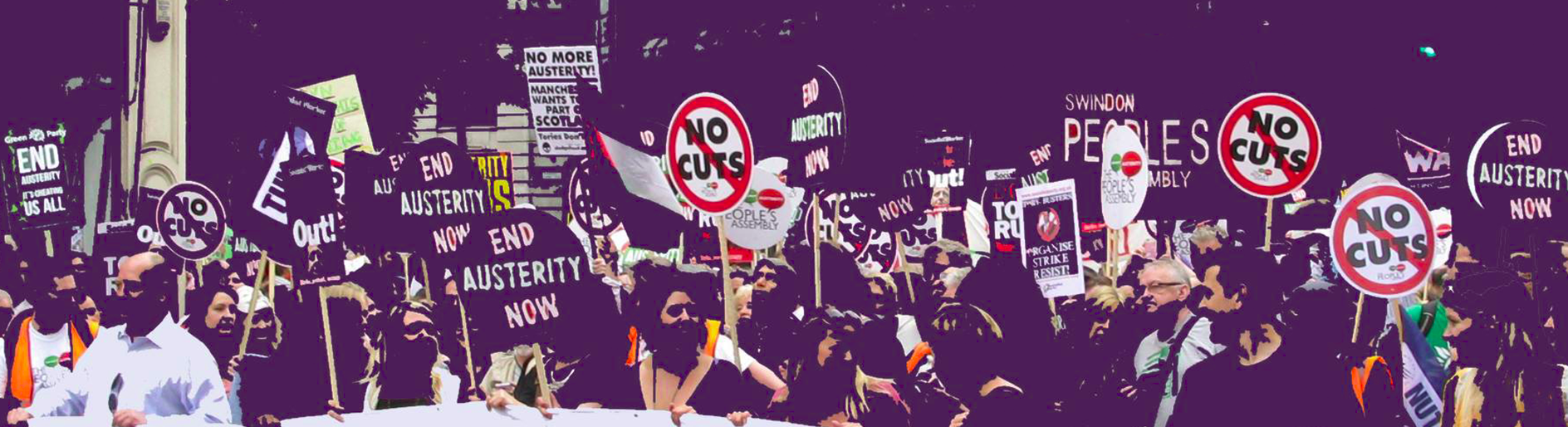
Kate Bell and Jason Strelitz write about how best the government can achieve its aim of ending child poverty in Britain.

By Kate Bell and Jason Strelitz
A Swedish colleague recently remarked on the horror with which his national press greeted the news that child poverty rates were set to soar in the UK. The same Institute for Fiscal Studies report caused no such reaction here.
For sure there was some press coverage. But as with the regular news items about the numbers in child poverty which have pock marked the media since Tony Blair’s 1999 pledge to end child poverty in a generation, the news represented something of a tumbleweed movement; to change metaphor, a bit of splash but very little ripple.
Today we have published “Decent Childhoods: Reframing the fight to end child poverty”.
The report reflects on what was successful in Labour’s approach to tackling child poverty and what wasn’t. The successes don’t need repeating here, though they should be acknowledged.
Though the pledge to end child poverty by 2020 became law in the 2010 child poverty act, the target to halve child poverty by the same year was not met, and the indicators now suggest it is moving in the wrong direction.
We identify two problems with the approach in the past decade.
Firstly child poverty often appeared an orphan policy area, unconnected to wider questions about the kind of economy or society we have had, as if the former could be adequately addressed without, altering the latter.
Secondly the agenda failed to resonate with many people including those living in poverty. We focus here on this issue. With child poverty levels rising this is important. If we couldn’t convince people to care about child poverty in the good times, how can we build a constituency of support for this agenda when so many more people around the country are experiencing their own uncertainties?
We argue that it is possible, but not without changing the way the debate is framed.
While poverty remains a powerful explanatory concept, it is not a strong frame for engaging people in support of change. It’s not the rejectionists we’re focused on, those whose starting position is to say that people in poverty are lazy and to blame, though there are plenty of them.
Rather we want to engage those who are ambivalent, who recognise childhood disadvantage, unemployment, the problems of low pay, high childcare costs, low social mobility, and inequality, but don’t necessarily call it poverty.
This population is large, and what’s more it encompasses many who social science will categorise as in poverty but who would never call themselves that. Part of that may be because they don’t consider themselves poor in international terms but its also that poverty is stigmatised; no badge of honour.
Too often the way child poverty has been discussed has been as if “the poor” were different from others, with different values and needs, cut off from the rest of society.
Countless research shows that poverty is dynamic; a recent Joseph Rowntree Foundation study demonstrates that while chronic poverty (defined in terms of years with household income below 60 per cent median) only affects 10 per cent of the poor population, and three per cent of the population as a whole, poverty at some point affected 30 per cent of the population.
Yet too often poverty has been seen as the condition of ‘the bottom’, and linked with a misleading debate about an ‘underclass’. The problems faced by many of those on low incomes in Britain are shared by many others.
That’s partly because they are the same people, captured in one survey snap shot above the poverty line, at another point in time below with fluctuations of income depending on work, family and health. Its partly because the experiences of poverty in the UK, struggling to make ends meet, with an insecure labour market, debt, housing, education are those shared by so many in Britain.
The child poverty agenda was always more inclusive than it sounded; its now even more so. The challenge is to communicate that.
Rather than constantly trying to translate a concept that doesn’t resonate, we can do that by keeping focussed on what Martha Nussbaum has called “the central and valuable things in life that people can actually do and be’. We argue that the concept of Decent Childhoods might allow us to do that: a decent childhood is one in which all children live in families with financial security, all children have meaningful opportunities; and all children are valued.
Achieving this will mean large scale changes in the labour market, in the educational system, and in the way we talk about and engage with people on low incomes. But perhaps it’s a positive vision that can inspire that kind of change. Some have suggested that ending child poverty is unaffordable in our current economic climate. It might be harder to make this claim about delivering a decent childhood for all.
“Decent childhoods: Reframing the fight to end child poverty” is being launched today at a seminar with Kate Green MP, Jon Cruddas MP, and David Robinson, Senior Adviser at Community Links; The report is available at www.decentchildhoods.org.uk
See also:
• The coalition is actively increasing child poverty – Felicity Dennistoun, October 11th 2011
• How poor children will get poorer on Cameron’s watch – Dr Sam Royston, October 11th 2011
• Child poverty the “challenge of our generation” says McConnell – Ed Jacobs, June 7th 2011
• New Labour’s record on child poverty: Lessons must be learnt – Kate Bell and Jason Strelitz, May 12th 2011
• OECD: Spending cuts threaten progress on child poverty – Will Straw, April 28th 2011
To reach hundreds of thousands of new readers and to make the biggest impact we can in the next general election, we need to grow our donor base substantially.
That's why in 2024, we are seeking to generate 150 additional regular donors to support Left Foot Forward's work.
We still need another 124 people to donate to hit the target. You can help. Donate today.
19 Responses to “Forget “child poverty”; just fight for a decent childhood for all”
Michael
Forget “child poverty”; just fight for a decent childhood for all http://t.co/WtAtzT7S
Karen Buck MP
Forget “child poverty”; just fight for a decent childhood for all: http://t.co/SUlnNlyS write Kate Bell and Jason Strelitz
Wendy Russell
This report makes some excellent suggestions regarding structural changes but still doesn’t make the radical changes it promises in terms of attitudes. It still ‘others’ poor children and discusses services that are ‘done unto’ a section of the population seen as lacking and needy. The vision of childhood, despite a nod to the importance of childhood now as well as future prospects, is still very future focused. But my main criticism is that it does not discuss children’s own agency, their own capacity to cope with their situations and make them better for themselves. It misses out on the research into children’s own resilience and using this as a starting point to identify what might make children’s lives better in the here and now (and therefore, by implication, in the future). Despite citing Sen and Nussbaum’s capability approach, it omits to discuss in any depth 2 of these that are crucial in this debate: play, and a sense of control over the environment. These, as well as the structural necessities listed, are crucial to the aim of valuing all children. Have a look at Lester and Russell’s research into children’s ability to find time and space to play and how this helps to build resilience and a sense of hope in the near future through attachments to friends and places and a sense that, for the time of playing at least, life is worth living. http://bit.ly/hbYdWo
Sara Bryson
Forget “child poverty”; just fight for a decent childhood for all: http://t.co/SUlnNlyS write Kate Bell and Jason Strelitz
Wendy Russell
Some gd bits in this report on child poverty, but zero on chdns agency: play as an element of S&N's capability approach http://t.co/HkmonG2g