


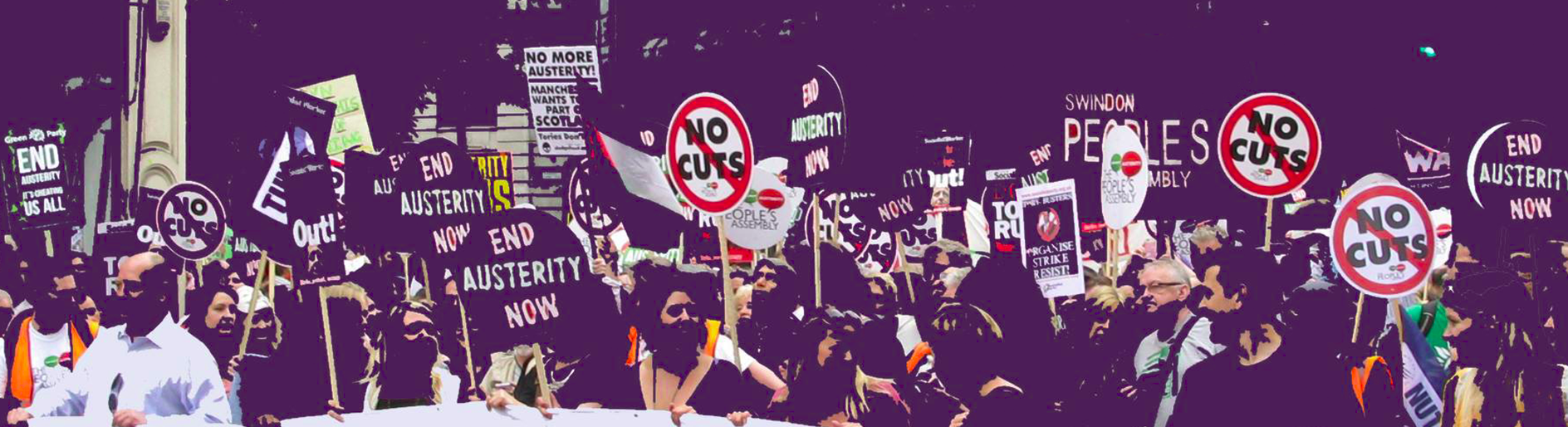

Neil Foster presents 12 problems with the government's unfair, unworkable, and regressive plan to localise public sector pay.

Neil Foster is the policy and campaigns officer for northern TUC
Today business secretary Vince Cable has warned of the “practical problems” of localising public sector pay bargaining. He is right to be cautious. This was a pledge slipped into the chancellor of the exchequer’s autumn statement and already appears ideologically driven, unfair and counter-productive.
This proposal would have overwhelmingly negative consequences for the regions outside of the South East.
1. It would reduce the pay of almost 3 million workers.
There are 680,000 public sector workers in the North West, 536,000 in Yorkshire & Humber, 496,000 in the West Midlands, 495,000 in the South West, 444,000 in the East of England, 382,000 in the East Midlands, 274,000 in the North East and 336,000 in Wales who would all face a real terms pay cut.
Even at a cautious level of a £1,000 cut in real terms that would result £3 billion taken out of regional economies per year and would significantly reduce disposable income and demand in the respective local economies.
The result would be to make it harder for the private sector to prosper when the economy is so vulnerable from recession and public sector job cuts. It would shift funds to the South East and be an annual loss double the size of the government’s 3-year regional growth fund.
2. It doesn’t compare like with like. Many public sector jobs simply don’t exist in the private sector to make a comparison. There are no private sector paramedics or social workers just as there are very few public sector mechanics.
The only legitimate and fair comparison is between two people doing the same job, with the same skills and experience.
3. There is no evidence the public sector is ‘crowding out’ the private sector. This could only conceivably ever happen in times of full employment.
Instead the North East has the highest unemployment in the UK with eight jobseekers per vacancy and 2,000 public sector jobs lost each month. The private sector has rarely had such a wide choice of labour. Any private skill shortages will be only solved by investment, training or apprenticeships not reducing the pay of others.
4. Postcode pay would increase unfairness and damage morale. Pay localisation could mean two people living on the same street as each other doing an identical job but being paid differently if based at different locations. This is divisive and would be unfair.
5. It could lead to a public sector brain drain in economically deprived areas. In a recent Westminster Hall debate called by Plaid Cymru and supported by Labour MPs, the government said it will exempt doctors and dentists from local pay bargaining to avoid a ‘brain drain’.
However in the NHS the real shortage is in fact among midwives and they wouldn’t be protected.
Instead ministers have arbitrarily chosen to preserve national pay bargaining among the highest paid public sector professionals while intending to reduce the real terms pay of the rest.
6. It would be costly and complex with hundreds and thousands of local pay bargaining negotiations required. That is why many large UK-wide private sector employers with multi-sites from Argos to Greggs, Tesco and Marks and Spencer also use national pay bargaining for their workforce.
7. It would reduce not increase living standards in the regions. Pay localisation would shift resources from the poorest regions to the wealthiest and reinforce their economic identity as a ‘low pay region’. There would be a race to the bottom of pay at a time when pay as a share of GDP has not be lower in 30 years.
8. Increase reliance on benefits. Since relatively low paid public sector workers face pay freezes and real terms cuts it could lead to an increase in tax credits and housing benefits. This isn’t progress.
9. The thin end of the wedge. If the government wins this argument that a cheaper standard of living should mean pay localisation, then why won’t ministers seek to ‘localise’ the level of minimum wage, tax credits or other state benefits too?
10. Pay localisation will affect many in the private sector too. 40 per cent of couples with dual income have one partner work in the public sector and one in the private sector. The government’s divisive thinking fails to take account of the fact it will squeeze the living standards of those working outside of the public sector too.
If ministers were at all interested in increasing living standards among low paid workers they would promote a living wage. This proposal will not make private sector workers in the regions one penny better off. Instead it will harm retailers in the regions whose customers will have even less to spend than ever.
11. It will increase legal challenges. Public sector employers have been developing pay systems that would reduce the number of potential equal pay challenges. Paying different rates of pay for people doing ‘like work’ and ‘for no good reason’ would potentially increase the number of equal pay challenges about unfair treatment.
12. This fundamentally fails to understand how to stimulate growth.
The UK economy is suffering a demand crisis and the government’s austerity programme is only making things worse. Only jobs and growth will generate the level of tax receipts required and that requires maintaining employment and a stimulus that reaches ordinary households.
Instead the government has chosen to focus on worsening the conditions of three million workers outside of the south east which will only compound errors.
Conservative ministers would be wise not to appear to use public sector workers as scapegoats for the government’s failure to date to deliver a sustained economic recovery.
Austerity is not working and targeted public spending and investment goes hand-in-hand with growth and tax receipts. Docking the pay of three million workers in the regions following years of pay freezes and real term cuts will only make things worse.
There is no evidence that in a climate of flat growth and high unemployment that public sector pay localisation will boost enterprise in the regions. Instead it will entrench challenges and be counterproductive. This policy could cause an array of political and economic problems ministers would be well advised to avoid.
The business secretary is indeed right to be wary of this half-baked, unfair, and ideologically-driven proposal.
See also:
• Cameron needs to start backing our young people and universities – Sally Hunt, January 18th 2012
• Cameron and Osborne want the unemployed to work for £1.78 an hour – Alex Hern, November 10th 2011
• Tory MP: Disabled should work for less than minimum wage – Shamik Das, June 17th 2011
• Economic challenges could be helped through collective bargaining – Chris Wright, March 28th 2011
• It’s fairer up North but inequality is rising across the board – Jenni Viitanen, February 22nd 2011
To reach hundreds of thousands of new readers and to make the biggest impact we can in the next general election, we need to grow our donor base substantially.
That's why in 2024, we are seeking to generate 150 additional regular donors to support Left Foot Forward's work.
We still need another 124 people to donate to hit the target. You can help. Donate today.
56 Responses to “The 12 practical problems of localising public sector pay”
Anonymous
Well, it depends of whether or not you want your pay cut now, or you pay cut later and bigger.
After all, if you borrow to fund pay, (that’s what a deficit is), you just have to cut latter and harder.
You need to be quite clear, and you aren’t – deliberately.
We can borrow for the moment to pay your wages.
However, you need to be clear, who takes the hit for paying back that borrowing.
Is it muggings in the private sector.
Or is it future pay cuts in the public sector. ie. Borrowings plus interest.
Anonymous
The only legitimate and fair comparison is between two people doing the same job, with the same skills and experience.
=============
Why not make it as a comparison between applicants?
if you can get someone on 20K, why do you insist that we pay them 30K?
Anonymous
The only legitimate and fair comparison is between two people doing the same job, with the same skills and experience.
=========
No doubt excluding the 30-40% it costs for the pensions.
Notice too that you omit to mention the value that the people generate.
What if a private sector worker is twice as productive as a public sector worker doing the same job?
Will you accept the 50% pay cut in that case?
Selohesra
You got it all wrong LB – the two Eds having cunning plan – they will repay current debt by borrowing from someone else – simples
Blarg1987
I think you will find private school teachers, health care workers, engineers and private military contractors do get paid more for doing a very simular role.
The thing that can skew the statistics is when they compare a NHS nurse with a person who works in a care home which are not like for like jobs.
there are already pay freezes in the public sector, the idea of localising pay I think will be spending pounds to save pennys long term.
We have to society what do we want do we want well run and funded public services which we will have to pay for. Politicians only borrowed as if they said the truth, vote for me and I will increase your taxes but you will get investment in services, people would not have voted for them.
We are very selfish as a society and that needs to change as it is ironic how a generation who may have benefited from better investment in public services want lower taxes for themselves rather then think well i benefited from this so I should pay into the system for te next generation.
Before people say we are paying more taxes etc remember if you don;t invst in your property for a prolonged period of time, the cost to renovate it will be substantially more then bits and pieces, that is the mountain us as a society have to decide if we want to climb then not moan if we get nothing if we don;t want to pay for it.