Good Society > Published by Alex Hern, February 22nd 2012 at 11:42 am

The information you need to end workfare

Print Friendly


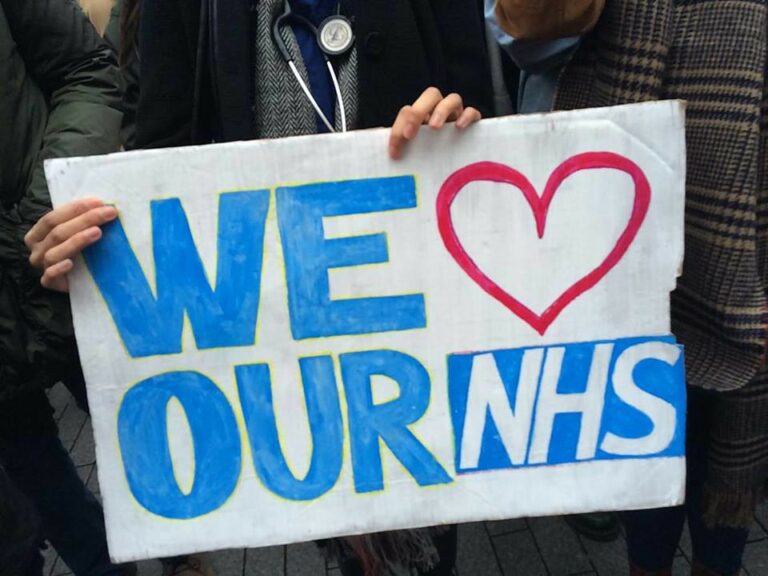
The campaign against workfare has already scored a number of hits, with Tesco, Waterstones, Sainsbury’s, and many others backing out of the government schemes forcing the unemployed to work to keep their jobseekers allowance.

We first reported on this scandal in November, and awareness has grown since then, with anger hitting a tipping point last week. Since then, the successes have come thick and fast, and it is within our power to end this scheme for good.

Left Foot Forward and Political Scrapbook have put together a factsheet, containing information compiled by the campaign group Boycott Workfare from freedom of information requests and personal testimony, showing companies known to use workfare.

Along with Political Scrapbook and Liberal Conspiracy, we urge you to contact the companies below by phone, email or Twitter (with the hashtag #workfare), and explain that you won’t be using their services until they stop using forced labour.

A few notes on the data:

• Due to the nature of some of the FoI requests, there is a focus on companies in the south east.

• The DWP has sent incorrect responses to FoI requests before, so our information is only as good as theirs. If your company is incorrectly included, please contact Boycott Workfare to ensure you are correctly credited as using fair labour.

• To keep track of our successes, companies which have joined the campaign are kept on the spreadsheet with a note next to their name. Please check this before you call them!

You can get the information here

read more
Print Friendly


The campaign against workfare has already scored a number of hits, with Tesco, Waterstones, Sainsbury’s, and many others backing out of the government schemes forcing the unemployed to work to keep their jobseekers allowance.

We first reported on this scandal in November, and awareness has grown since then, with anger hitting a tipping point last week. Since then, the successes have come thick and fast, and it is within our power to end this scheme for good.

Left Foot Forward and Political Scrapbook have put together a factsheet, containing information compiled by the campaign group Boycott Workfare from freedom of information requests and personal testimony, showing companies known to use workfare.

Along with Political Scrapbook and Liberal Conspiracy, we urge you to contact the companies below by phone, email or Twitter (with the hashtag #workfare), and explain that you won’t be using their services until they stop using forced labour.

A few notes on the data:

• Due to the nature of some of the FoI requests, there is a focus on companies in the south east.

• The DWP has sent incorrect responses to FoI requests before, so our information is only as good as theirs. If your company is incorrectly included, please contact Boycott Workfare to ensure you are correctly credited as using fair labour.

• To keep track of our successes, companies which have joined the campaign are kept on the spreadsheet with a note next to their name. Please check this before you call them!

You can get the information here

There are five government programmes which can be described as workfare, and all have a compulsory element to them:

The work experience programme

Citizens Advice describes the work experience programme as a “compulsory program”, saying:

If you are claiming Jobseeker’s Allowance, you must take part … if you are advised to do so by a personal adviser. Your benefit may be affected if you refuse to do so or leave a scheme before completing it.

Mandatory work activity scheme

The clue’s in the name, and Citizens Advice clarify:

If you are required to take part in the scheme, but you don’t without a very good reason, you will be sanctioned.

The work programme

Citizens Advice detail the groups who have to take part in the work programme; although further groups can volunteer, it is compulsory if:

• you are aged 18-24 and have claimed jobseeker’s allowance for nine months

• you are aged 25 or over and have claimed jobseeker’s allowance for 12 months

• you are seriously disadvantaged in the labour market, for example because a disability has made it hard to find work. When you qualify and whether you can choose to take part will depend on which area you live in and what your circumstances are

• you have recently claimed incapacity benefit, after claiming jobseeker’s allowance for three months

• you are claiming income-related employment and support allowance, are in the work-related activity group, and are expected to be fit for work within three months.

Sector based work academies

Directgov explains:

Taking part in sector-based work academies is entirely voluntary, but once you accept a place you must complete the process.

Community action programmes

The DWP’s guidance booklet states (pdf):

Mandation is there to use as a tool to ensure that claimants do what is required of them… Claimants who are mandated to undertake activity may incur a loss or reduction of benefit should they fail to comply without good reason.

To see the full information collated by Left Foot Forward and Political Scrapbook, click here

See also:

Chris Grayling should respond to criticism of workfare, not smear the criticsIzzy Koksal, February 21st 2012

Tesco’s unpaid labour shows the flaw at the heart of workfareAlex Hern, February 16th 2012

Five reasons Clegg can’t stand on his social mobility recordAlex Hern, January 12th 2012

2012: The year ahead for young peopleAlex Hern, January 7th 2012

Why workfare won’t workStephen Evans, November 8th 2010

back to excerpt
Good Society > Published by Ed Jacobs, February 15th 2012 at 12:20 pm

Scotland unites in wanting to save Rangers

Print Friendly


Following the surprise news yesterday that Rangers had appointed its own administrators, and there is widespread concern this morning about the impact the decision could have not just on Scottish football but also Scottish life. Outlining her concerns, SNP sports minister, Shona Robison declared:

Rangers is a crucial part of Scotland’s national game, and our interest is ensuring that a resolution can be arrived at between HMRC and the club to deliver these vital objectives.

At the Herald, its editorial placed the blame for the club’s current troubles firmly at the door of its former owner, Sir David Murray.

It today writes:

“Much of the blame for the club’s present plight falls on others. In pursuit of cups, titles and glory, Rangers has overspent for years. In 2000 former owner Sir David Murray boasted: “For every £5 Celtic spend, we will spend 10″. For a long time that has been the way with football. Hearts ruled heads and banks let clubs off the hook.

In a global economy that appeared to offer perpetual growth, debt did not seem to matter. We now know the banks themselves were run on the same basis. Many of those who occupied the stands had a similar attitude to their own finances, maxing out on credit cards and buying dream homes they could not afford.

“The situation in Scotland has been aggravated by the proximity of the English premiership, the richest league in the world, with its lucrative Sky Sports deal and capacity to suck in the best players with “Sky-high” wage offers. Scottish clubs could not compete with that, especially since the collapse of Setanta.”

read more
Print Friendly


Following the surprise news yesterday that Rangers had appointed its own administrators, and there is widespread concern this morning about the impact the decision could have not just on Scottish football but also Scottish life. Outlining her concerns, SNP sports minister, Shona Robison declared:

Rangers is a crucial part of Scotland’s national game, and our interest is ensuring that a resolution can be arrived at between HMRC and the club to deliver these vital objectives.

At the Herald, its editorial placed the blame for the club’s current troubles firmly at the door of its former owner, Sir David Murray.

It today writes:

“Much of the blame for the club’s present plight falls on others. In pursuit of cups, titles and glory, Rangers has overspent for years. In 2000 former owner Sir David Murray boasted: “For every £5 Celtic spend, we will spend 10″. For a long time that has been the way with football. Hearts ruled heads and banks let clubs off the hook.

In a global economy that appeared to offer perpetual growth, debt did not seem to matter. We now know the banks themselves were run on the same basis. Many of those who occupied the stands had a similar attitude to their own finances, maxing out on credit cards and buying dream homes they could not afford.

“The situation in Scotland has been aggravated by the proximity of the English premiership, the richest league in the world, with its lucrative Sky Sports deal and capacity to suck in the best players with “Sky-high” wage offers. Scottish clubs could not compete with that, especially since the collapse of Setanta.”

Addressing the thorny issue meanwhile of how Ranger’s long standing rivals, Celtic should react; the Herald sounded a warning, concluding:

“Though many Celtic followers may be jubilant, ironically they have almost as much to lose. Despite the recent focus on the bile of sectarianism in football, this world-famous rivalry needs both halves to flourish. Celtic would not be Celtic without Rangers. Indeed, in search of more challenging competition, it might soon seek refuge south of the Border.

“The loss to Scotland would be incalculable. The Old Firm alone is worth an estimated £120m to the Scottish economy. For other SPL clubs, visits by one of the big two amount to a pay day. The same applies to lower division clubs lucky enough to draw one of them in cup competitions.”

Looking ahead, answering the “what next” question, Neil Patey, a partner at Ernst and Young who is himself a football finance expert writes in the Scotsman:

“The law gives the secured creditor the power to appoint its own administrator, so it was no great surprise that the courts allowed the company to appoint Duff & Phelps, despite HMRC’s challenge.

“I think HMRC could have had two motives for the action it took in the Court of Session yesterday.

“Firstly, Craig Whyte had said he wanted to negotiate with HMRC. Clearly, it did do not want to negotiate with him. Rather, the Revenue wanted to proceed down the administration route and not waste any more time.

“Secondly, looking at the submissions to court, it seems HMRC was concerned about whether Duff & Phelps could have been perceived as having a conflict of interest due to its existing relationship with Mr Whyte, and therefore not be seen as truly independent.

“This would have been a difficult position for HMRC to persuade the court of, but I think it achieved its secondary objective – forcing Rangers to get on with the administration.

“After the hearing, we saw Strathclyde Police raise concerns about future payments. Again, this was not a surprise and I think we will see a lot of this.

“The administrators will have to decide who are the priority suppliers – the ones critical to getting the team on the park on match day – and pay those people as first priority.

“They are also going to have to cut costs, including backroom staff, and maybe even within the squad itself, to ensure that weekly outlays are covered.

“There is also a danger that Rangers could go into liquidation, depending on whether the administrator can reach an agreement with creditors.

“They need 75 per cent of creditors to agree in order to secure a company voluntary arrangement (CVA); if they can’t get that agreement, the only option left will be to start selling the club’s assets through a liquidation process – that’s the worst-case scenario.”

But perhaps the most poignant words belong to the Daily Record which has concluded quite simply:

“The next few days will be a crucial time for the future of Rangers and the shape of Scottish football. We can only hope a solution emerges that allows a great club, a Scottish institution famous the world over, to survive and prosper at no cost to others.

See also:

SNP’s anti-sectarianism bill unites the oppositionEd Jacobs, December 15th 2011

Labour: Anti-sectarian legislation is right in spirit, but flawed in executionJames Kelly MSP, November 7th 2011

Sectarian Law will address “ugly element” within Scottish societyJohn Finnie MSP, November 3rd 2011

Has racism returned to football?Shamik Das, October 25th 2011

Beware of pushing Catholics out of the progressive clubKevin Meagher, September 18th 2010

back to excerpt
Good Society > Published by Alex Hern, at 11:20 am

Get Google Alerts? You’ll have to pay Murdoch, Desmond and co. £150

Print Friendly


The Copyright Tribunal has ruled that businesses using services like Google News and Google Alerts will have to pay a fee of £150 to the Newspaper Licensing Agency, an umbrella body that collects and distributes licensing revenue to its Fleet Street members, who include Rupert Murdoch’s News International and Richard Desmond’s Northern and Shell.

Wired UK’s Mark Brown reports:

This came as part of a long running legal case between the NLA, and media-monitoring service Meltwater.

Meltwater’s customers can subscribe to receive alerts when their company is mentioned in the press — with links to the articles in question. But the NLA — which speaks for over a thousand UK papers — argues that this is an infringement of copyright and introduced a licensing scheme for media-monitors that crawl websites, take snippets of text and offer those copies to clients…

The newspaper super-group also revealed in the trial that it will require any business of more than five employees to hold a licence if they want to use Google News or Google Alerts.

One further point is yet to be clarified in the case — whether the mere act of browsing a newspaper company’s website in a workplace is an infringement of copyright, requiring a license. That one will be decided by the Supreme Court in February 2013.

Is this the crony capitalism we’ve heard so much about?

read more
Print Friendly


The Copyright Tribunal has ruled that businesses using services like Google News and Google Alerts will have to pay a fee of £150 to the Newspaper Licensing Agency, an umbrella body that collects and distributes licensing revenue to its Fleet Street members, who include Rupert Murdoch’s News International and Richard Desmond’s Northern and Shell.

Wired UK’s Mark Brown reports:

This came as part of a long running legal case between the NLA, and media-monitoring service Meltwater.

Meltwater’s customers can subscribe to receive alerts when their company is mentioned in the press — with links to the articles in question. But the NLA — which speaks for over a thousand UK papers — argues that this is an infringement of copyright and introduced a licensing scheme for media-monitors that crawl websites, take snippets of text and offer those copies to clients…

The newspaper super-group also revealed in the trial that it will require any business of more than five employees to hold a licence if they want to use Google News or Google Alerts.

One further point is yet to be clarified in the case — whether the mere act of browsing a newspaper company’s website in a workplace is an infringement of copyright, requiring a license. That one will be decided by the Supreme Court in February 2013.

Is this the crony capitalism we’ve heard so much about?

See also:

Dacre recalled to Leveson over Grant ‘mendacious’ claimAlex Hern, February 7th 2012

Express owner: ‘Mail is Britain’s worst enemy’Alex Hern, January 12th 2012

Coogan: “If the Daily Mail went to the wall tomorrow I’d be delighted”Shamik Das, October 13th 2011

Secret trade agreement places western profit over global welfareAlex Hern, September 29th 2011

What does Coulson have on Cameron and Murdoch?Tom Rouse, August 23rd 2011

back to excerpt
Good Society > Published by Ed Jacobs, February 14th 2012 at 10:30 am

We need to defend the hope at the heart of Christianity, not fight militant secularisation

Print Friendly


The Conservative Party co-chair, Baroness Warsi, will today deliver a speech at the Vatican in which she will warn that religion in the UK is being:

“Sidelined, marginalised and downgraded in the public sphere.”

Leading a delegation of Ministers on a two day visit to mark the 30th anniversary of the establishment of full diplomatic ties between the UK and the Vatican, Warsi will deliver her speech against a growing sense of unease at a growing marginalisation of faith in general and Christianity in particular, following last week’s ruling by the High Court outlawing the centuries-old tradition of formal prayers being said at the start of local council meetings across the country.

Previewing her speech, Warsi today writes in the Telegraph:

My fear today is that a militant secularisation is taking hold of our societies. We see it in any number of things: when signs of religion cannot be displayed or worn in government buildings; when states won’t fund faith schools; and where religion is sidelined, marginalised and downgraded in the public sphere.

For me, one of the most worrying aspects about this militant secularisation is that at its core and in its instincts it is deeply intolerant. It demonstrates similar traits to totalitarian regimes – denying people the right to a religious identity because they were frightened of the concept of multiple identities.

She continues:

Will be arguing for Europe to become more confident and more comfortable in its Christianity. The point is this: the societies we live in, the cultures we have created, the values we hold and the things we fight for all stem from centuries of discussion, dissent and belief in Christianity.

These values shine through our politics, our public life, our culture, our economics, our language and our architecture. And, as I will say today, you cannot and should not extract these Christian foundations from the evolution of our nations any more than you can or should erase the spires from our landscapes.

read more
Print Friendly


The Conservative Party co-chair, Baroness Warsi, will today deliver a speech at the Vatican in which she will warn that religion in the UK is being:

“Sidelined, marginalised and downgraded in the public sphere.”

Leading a delegation of Ministers on a two day visit to mark the 30th anniversary of the establishment of full diplomatic ties between the UK and the Vatican, Warsi will deliver her speech against a growing sense of unease at a growing marginalisation of faith in general and Christianity in particular, following last week’s ruling by the High Court outlawing the centuries-old tradition of formal prayers being said at the start of local council meetings across the country.

Previewing her speech, Warsi today writes in the Telegraph:

My fear today is that a militant secularisation is taking hold of our societies. We see it in any number of things: when signs of religion cannot be displayed or worn in government buildings; when states won’t fund faith schools; and where religion is sidelined, marginalised and downgraded in the public sphere.

For me, one of the most worrying aspects about this militant secularisation is that at its core and in its instincts it is deeply intolerant. It demonstrates similar traits to totalitarian regimes – denying people the right to a religious identity because they were frightened of the concept of multiple identities.

She continues:

Will be arguing for Europe to become more confident and more comfortable in its Christianity. The point is this: the societies we live in, the cultures we have created, the values we hold and the things we fight for all stem from centuries of discussion, dissent and belief in Christianity.

These values shine through our politics, our public life, our culture, our economics, our language and our architecture. And, as I will say today, you cannot and should not extract these Christian foundations from the evolution of our nations any more than you can or should erase the spires from our landscapes.

Her remarks echo those of the former Archbishop of Canterbury, Lord Carey, who on Saturday used an interview on the Today programme to warn of the marginalisation of Christians in British society and, following David Cameron’s call last year, to encourage Britons to“actively stand up and defend” our Christian values.

For those that now advocate a diminished role for Christianity within our society, the argument goes that we shouldn’t “impose” religion on those who do not want it.

I would agree – forcing religion on anyone achieves nothing other than building resentment. However, to deny, as some now seem to be pushing, the role of Christianity within public life would be to deny a voice to the very faith that has provided the bedrock of our morals, ethics and values as argued by David Cameron.

But at its heart is an issue of hope. As a nation our hopes and aspirations were so often intrinsically linked to the pursuit of money. The recession and subsequent economic collapse proved that hoarding wealth provides little more than temporary comfort and is itself a corrosive force within society as personal greed has too often dominated.

With families struggling with the prospects of unemployment, losing benefits and poverty, fighting for the right of Christians to remain very firmly at the top table of British life is about ensuring that a message of hope can be heard loud and clear in an increasingly hopeless world.

I take as an example my own circumstances.

I have suffered on/off with anxiety problems. Some days and weeks things are ok, others it can be difficult to figure out what I’m getting anxious about. But the comfort and support I have had from my family at church has been overwhelming.

The love they show based not on them wanting to do good deeds to gain brownie points with God, but on the message within the book of Mark to “Love your neighbour as yourself” has been humbling.

In a society in which admitting weakness can all too often be looked down on and dismissed as essentially crazy, the comfort of having a Christian family in which it is possible to open up when things aren’t going to well is such a comfort, in a way that a secular world has difficulty showing. It is a love unlike any other and one we cannot allow to be marginalised.

Desmond Tutu once wrote:

Dear Child of God, I write these words because we all experience sadness, we all come at times to despair, and we all lose hope that the suffering in our lives and in our world will never end.

I want to share with you my faith and my understanding that this suffering can be transformed and redeemed. There is no such thing as a totally hopeless case.

Our God is an expert at dealing with chaos, with brokenness, with all the worst that we can imagine. God created order out of disorder, cosmos out of chaos, and God can do so always, can do so now — in our personal lives and in our lives as nations, globally.

The most unlikely person, the most improbable situation — these are all ‘transfigurable’ — they can be turned into their glorious opposites. Indeed, God is transforming the world now — through us — because God loves us.

In a world and society of increasing despair, how often can we say that the “secular world” provides a beacon of hope and love in such a way as the Christian faith declares? We cannot allow the Christian message of hope to be snubbed out from our public life.

See also:

As order breaks down in Syria, its Christians suffer the consequencesEd Jacobs, February 7th 2012

MPs to consider Christian freedoms in AlgeriaEd Jacobs, October 26th 2011

Look Left – Allies step up pressure for action on Syria as death toll risesShamik Das, June 10th 2011

A “new” age of Christian persecution?Ed Jacobs, January 23rd 2011

Senior Tory: Muslim MPs “don’t have any principles”Will Straw, May 5th 2010

back to excerpt
Good Society > Published by Daniel Elton, February 9th 2012 at 11:14 am

Conservative commentator believes in smacking because his instinct says so

Print Friendly


In a bizarre column on ConservativeHome this morning, Andrew Lilico, better known as a professional economist, comes out in a rousing defence of parents’ right to smack children.

His argument basically runs as follows:

1) Whether the evidence suggests smacking is good or bad for a child is irrelevant, as there’s no such thing as a perfect parent anyway, and evidence-based policy-making when it comes to smacking leads to a totalitarian state.

2) There may be no disciplinary alternative to smacking, so the choice for many is smacking or no discipline whatsoever

3) “Instinct, in all human societies, tells us that smacking delivers something.” [direct quotation]

4) “I smack my children as an expression of my special parent-child relationship of touch…Smacking, done properly, is an authentic expression of love in touch.” [direct quotation]

The logical structure is fairly straightforward. By saying in 1) that the evidence doesn’t matter, it allows Lilico to indulge in the cod psychology of 2,3, and 4. It is fairly reminiscent of the Stephen Colbert line:

“That’s where the truth lies, right down here in the gut. Do you know you have more nerve endings in your gut than you have in your head? You can look it up. Now, I know some of you are going to say, “I did look it up, and that’s not true.” That’s ’cause you looked it up in a book. Next time, look it up in your gut. I did.”

However, there is something bizarre about a free market economist, who presumably signs up to the rational choice model of economics where we trust humans to act rationally, to expect them not to do so with the most important task of thier lives.

For those readers interested in knowing whether physical punishment for your children can harm them beyond the initial physical damage, here is a round up of some of the evidence:

Evidence that smacking three-year-olds leads higher rates of children being more violent towards other children, from Tulane University, New York State University and Wayne State University

Evidence that smacking is linked to higher levels of violence in society from the University of New Hampshire

Evidence that corporal punishment is “positively correlated with youths’ intentions to fight and fighting, bullying, and violence victimization” from the University of Minnesota and John Hopkins University

• In an analysis of 88 studies by Columbia University that corporal punishment is correlated with ten negative behaviours, such as antisocial behaviour, while one of the strongest associations was with corporal punishment and physical abuse

Evidence that corporal punishment leads to higher rates of adult alcoholism from Peking University and Wayne State University

See also:

Maryland madness: 14-year-old girl’s birthday wish? “Ban gay marriage”Shamik Das, February 2nd 2012

When a liberal is mugged by realityBen Mitchell, August 11th 2011

Barnardo’s: The age of criminal responsibility should be raisedPuja Darbari, November 21st 2010

Defending Sure Start against vicious right-wing attacksShamik Das, March 18th 2010

No escape for Cameron on importance of povertyWill Straw, January 12th 2010

Print Friendly


In a bizarre column on ConservativeHome this morning, Andrew Lilico, better known as a professional economist, comes out in a rousing defence of parents’ right to smack children.

His argument basically runs as follows:

1) Whether the evidence suggests smacking is good or bad for a child is irrelevant, as there’s no such thing as a perfect parent anyway, and evidence-based policy-making when it comes to smacking leads to a totalitarian state.

2) There may be no disciplinary alternative to smacking, so the choice for many is smacking or no discipline whatsoever

3) “Instinct, in all human societies, tells us that smacking delivers something.” [direct quotation]

4) “I smack my children as an expression of my special parent-child relationship of touch…Smacking, done properly, is an authentic expression of love in touch.” [direct quotation]

The logical structure is fairly straightforward. By saying in 1) that the evidence doesn’t matter, it allows Lilico to indulge in the cod psychology of 2,3, and 4. It is fairly reminiscent of the Stephen Colbert line:

“That’s where the truth lies, right down here in the gut. Do you know you have more nerve endings in your gut than you have in your head? You can look it up. Now, I know some of you are going to say, “I did look it up, and that’s not true.” That’s ’cause you looked it up in a book. Next time, look it up in your gut. I did.”

However, there is something bizarre about a free market economist, who presumably signs up to the rational choice model of economics where we trust humans to act rationally, to expect them not to do so with the most important task of thier lives.

For those readers interested in knowing whether physical punishment for your children can harm them beyond the initial physical damage, here is a round up of some of the evidence:

Evidence that smacking three-year-olds leads higher rates of children being more violent towards other children, from Tulane University, New York State University and Wayne State University

Evidence that smacking is linked to higher levels of violence in society from the University of New Hampshire

Evidence that corporal punishment is “positively correlated with youths’ intentions to fight and fighting, bullying, and violence victimization” from the University of Minnesota and John Hopkins University

• In an analysis of 88 studies by Columbia University that corporal punishment is correlated with ten negative behaviours, such as antisocial behaviour, while one of the strongest associations was with corporal punishment and physical abuse

Evidence that corporal punishment leads to higher rates of adult alcoholism from Peking University and Wayne State University

See also:

Maryland madness: 14-year-old girl’s birthday wish? “Ban gay marriage”Shamik Das, February 2nd 2012

When a liberal is mugged by realityBen Mitchell, August 11th 2011

Barnardo’s: The age of criminal responsibility should be raisedPuja Darbari, November 21st 2010

Defending Sure Start against vicious right-wing attacksShamik Das, March 18th 2010

No escape for Cameron on importance of povertyWill Straw, January 12th 2010

back to excerpt
Good Society > Published by Shamik Das, February 7th 2012 at 11:05 am

Ken vows to reverse Boris’s police cuts and “make the streets safer”

Print Friendly


Three months out from May’s Mayoral elections, Ken Livingstone today unveiled his “policing pledge for London”.

The two key planks of the Labour candidate’s promise are to reverse present Mayor Boris Johnson’s cuts to 1,700 police officers in the Met, and to reinstate sergeants to all 600 Safer Neighbourhood Teams, more of which will be beefed up to a minimum of nine officers, reversing the Tory incumbent’s cut to 300 sergeants in 2011.

Ken-LivingstoneFigures from the Metropolitan Police show violent crimes such as robbery, residential burglary and rape have all risen while police numbers have been cut, with knife crime rising every year under Johnson.

Police officer numbers peaked in 2010 at 33,260 officers; there are currently now just 31,657 officers in London. Last month, having earlier tried to spin otherwise, Boris finally admitted cutting 1,700 police officers.

Livingstone today said:

“Boris Johnson has admitted cutting 1,700 police officers. If I am elected, I will reverse his cuts. And I will reinstate sergeants to all 600 Safer Neighbourhood Teams, more of which will be beefed up to a minimum of nine officers.

“At a time when violent crimes including robbery, knife crime and rape are all rising in London it’s time to reverse the Tory Mayor’s cuts to the police and make the streets safer.”

With Labour’s Joanne McCartney AM, who called Boris “completely out of touch”, adding:

“Londoners across the capital have been appalled by Boris Johnson’s police cuts. It’s essential that there is a visible policing presence on our streets.

“Boris Johnson’s decision to cut 1700 police officers, including 300 experienced local police team sergeants shows why he is increasingly known as a Mayor who is completely out of touch.”

Labour say Ken will bring in new money to fund his pledge by ensuring Transport for London pays the full cost of the Safer Transport teams; reducing spending on bureaucracy at the new Mayor’s Office for Policing and Crime (MOPC); standing up against the national government’s cuts; and deploying new technology to ensure smarter working and increase detection rates.

The election takes place on Thursday, May 3rd.

See also:

Boris Johnson’s use of statistics are designed to mislead the publicLen Duvall AM, January 25th 2012

Ken pulls ahead of “increasingly out of touch” BorisShamik Das, January 19th 2012

Boris’s retreat from accountability over the Met should worry us allJoanne McCartney AM, January 16th 2012

Anger with police sparked the riotsBen Mitchell, December 4th 2011

Boris is turning back the clock for women in LondonShelly Asquith, November 14th 2011

Ken v Boris: Six months out, Livingstone steps up the pressure on transport and crimeShelly Asquith, November 8th 2011

The stats show the Tories make you worse off and less safeMichael Burke, July 24th 2011

Print Friendly


Three months out from May’s Mayoral elections, Ken Livingstone today unveiled his “policing pledge for London”.

The two key planks of the Labour candidate’s promise are to reverse present Mayor Boris Johnson’s cuts to 1,700 police officers in the Met, and to reinstate sergeants to all 600 Safer Neighbourhood Teams, more of which will be beefed up to a minimum of nine officers, reversing the Tory incumbent’s cut to 300 sergeants in 2011.

Ken-LivingstoneFigures from the Metropolitan Police show violent crimes such as robbery, residential burglary and rape have all risen while police numbers have been cut, with knife crime rising every year under Johnson.

Police officer numbers peaked in 2010 at 33,260 officers; there are currently now just 31,657 officers in London. Last month, having earlier tried to spin otherwise, Boris finally admitted cutting 1,700 police officers.

Livingstone today said:

“Boris Johnson has admitted cutting 1,700 police officers. If I am elected, I will reverse his cuts. And I will reinstate sergeants to all 600 Safer Neighbourhood Teams, more of which will be beefed up to a minimum of nine officers.

“At a time when violent crimes including robbery, knife crime and rape are all rising in London it’s time to reverse the Tory Mayor’s cuts to the police and make the streets safer.”

With Labour’s Joanne McCartney AM, who called Boris “completely out of touch”, adding:

“Londoners across the capital have been appalled by Boris Johnson’s police cuts. It’s essential that there is a visible policing presence on our streets.

“Boris Johnson’s decision to cut 1700 police officers, including 300 experienced local police team sergeants shows why he is increasingly known as a Mayor who is completely out of touch.”

Labour say Ken will bring in new money to fund his pledge by ensuring Transport for London pays the full cost of the Safer Transport teams; reducing spending on bureaucracy at the new Mayor’s Office for Policing and Crime (MOPC); standing up against the national government’s cuts; and deploying new technology to ensure smarter working and increase detection rates.

The election takes place on Thursday, May 3rd.

See also:

Boris Johnson’s use of statistics are designed to mislead the publicLen Duvall AM, January 25th 2012

Ken pulls ahead of “increasingly out of touch” BorisShamik Das, January 19th 2012

Boris’s retreat from accountability over the Met should worry us allJoanne McCartney AM, January 16th 2012

Anger with police sparked the riotsBen Mitchell, December 4th 2011

Boris is turning back the clock for women in LondonShelly Asquith, November 14th 2011

Ken v Boris: Six months out, Livingstone steps up the pressure on transport and crimeShelly Asquith, November 8th 2011

The stats show the Tories make you worse off and less safeMichael Burke, July 24th 2011

back to excerpt
Good Society > Published by George Readings, February 3rd 2012 at 3:45 pm

As Times launches Save our Cyclists campaign, perhaps now TfL will listen

Print Friendly


The Times yesterday launched its ‘Save our Cyclists’ campaign. It comes after Mary Bowers, a young journalist at the paper, was hit by a cement truck outside King’s Cross one Friday morning as she made her way to work; she remains in a coma.

Cyclists-on-Blackfriars-BridgeUnfortunately, her case is all too typical. Lorries make up five per cent of all traffic on British roads but, according to some estimates, are implicated in 50 per cent of cyclist deaths.

King’s Cross is also a particular hotspot. In December, TFL promised to review the junction there after the fourth cyclist in four years was killed by a lorry. Far from being a priority, no changes were promised until after the Olympics.

Similarly, two cyclists were killed in late 2011 at Bow Roundabout in east London. Both were using the new ‘Cycle Superhighway’, but a poorly designed junction left them vulnerable to other traffic.

It was left to Labour London Assembly member John Biggs to highlight the way cutting commuting times for car drivers was being prioritised over cyclists’ lives:

“TfL have previously said that there is nothing that they can do to make the roundabout safer, without causing traffic jams.

It is time they bite the bullet and accept longer journey times for motorists in exchange for keeping pedestrians and cyclists safe.”

TFL finally launched a consultation last month on how to improve cyclist safety at Bow Roundabout.

These cases underline why the Times’s campaign is so important. At both Kings Cross and Bow Roundabout there are some provisions for cyclists, but they haven’t been implemented in a way which actually keeps people safe.

In total, 16 cyclists were killed in London last year, many of them by lorries. Dozens more, like Mary Bowers, were badly injured. Despite the commonly held belief (based on a statistical anomaly in 2009), the majority of cyclists killed were men, not women.

Outside London, things are often even worse.

Cyclists passing Edgbaston Cricket Ground in Birmingham, for example, are allowed to share the pavement with pedestrians for quite some distance. Then, without warning, they are forced onto a  ’cycle path’ (a foot-wide strip of green paint) crammed onto the edge of a busy dual carriageway. Ten metres later, the cycle path promptly disappears and cyclists are on their own again.

The Times has identified eight key points to make British roads safer for cyclists; these include:

• Trucks entering a city centre should be required by law to fit sensors, audible truck-turning alarms, extra mirrors and safety bars to stop cyclists being thrown under the wheels.

• The 500 most dangerous road junctions must be identified, redesigned or fitted with priority traffic lights for cyclists and Trixi mirrors that allow lorry drivers to see cyclists on their near-side.

Cycle groups have been making these points for years. Perhaps now, with the backing of a major national paper, TFL and local authorities will start to listen. If they don’t, cyclists will continue to pay with their lives.

See also:

The challenges facing new transport secretary Justine GreeningRichard Hebditch, October 17th 2011

City Hall Tories accused of jeopardising cyclists’ safetyShamik Das, June 8th 2011

Vote 2011: The sustainable transport challenges in NI, Scotland & WalesEleanor Besley, May 6th 2011

Green challenges on transport policyRupert Read, November 15th 2010

Cameron’s failure to wear cycle helmet “irresponsible”George Readings, April 7th 2010

Print Friendly


The Times yesterday launched its ‘Save our Cyclists’ campaign. It comes after Mary Bowers, a young journalist at the paper, was hit by a cement truck outside King’s Cross one Friday morning as she made her way to work; she remains in a coma.

Cyclists-on-Blackfriars-BridgeUnfortunately, her case is all too typical. Lorries make up five per cent of all traffic on British roads but, according to some estimates, are implicated in 50 per cent of cyclist deaths.

King’s Cross is also a particular hotspot. In December, TFL promised to review the junction there after the fourth cyclist in four years was killed by a lorry. Far from being a priority, no changes were promised until after the Olympics.

Similarly, two cyclists were killed in late 2011 at Bow Roundabout in east London. Both were using the new ‘Cycle Superhighway’, but a poorly designed junction left them vulnerable to other traffic.

It was left to Labour London Assembly member John Biggs to highlight the way cutting commuting times for car drivers was being prioritised over cyclists’ lives:

“TfL have previously said that there is nothing that they can do to make the roundabout safer, without causing traffic jams.

It is time they bite the bullet and accept longer journey times for motorists in exchange for keeping pedestrians and cyclists safe.”

TFL finally launched a consultation last month on how to improve cyclist safety at Bow Roundabout.

These cases underline why the Times’s campaign is so important. At both Kings Cross and Bow Roundabout there are some provisions for cyclists, but they haven’t been implemented in a way which actually keeps people safe.

In total, 16 cyclists were killed in London last year, many of them by lorries. Dozens more, like Mary Bowers, were badly injured. Despite the commonly held belief (based on a statistical anomaly in 2009), the majority of cyclists killed were men, not women.

Outside London, things are often even worse.

Cyclists passing Edgbaston Cricket Ground in Birmingham, for example, are allowed to share the pavement with pedestrians for quite some distance. Then, without warning, they are forced onto a  ’cycle path’ (a foot-wide strip of green paint) crammed onto the edge of a busy dual carriageway. Ten metres later, the cycle path promptly disappears and cyclists are on their own again.

The Times has identified eight key points to make British roads safer for cyclists; these include:

• Trucks entering a city centre should be required by law to fit sensors, audible truck-turning alarms, extra mirrors and safety bars to stop cyclists being thrown under the wheels.

• The 500 most dangerous road junctions must be identified, redesigned or fitted with priority traffic lights for cyclists and Trixi mirrors that allow lorry drivers to see cyclists on their near-side.

Cycle groups have been making these points for years. Perhaps now, with the backing of a major national paper, TFL and local authorities will start to listen. If they don’t, cyclists will continue to pay with their lives.

See also:

The challenges facing new transport secretary Justine GreeningRichard Hebditch, October 17th 2011

City Hall Tories accused of jeopardising cyclists’ safetyShamik Das, June 8th 2011

Vote 2011: The sustainable transport challenges in NI, Scotland & WalesEleanor Besley, May 6th 2011

Green challenges on transport policyRupert Read, November 15th 2010

Cameron’s failure to wear cycle helmet “irresponsible”George Readings, April 7th 2010

back to excerpt
Good Society > Published by Shamik Das, February 2nd 2012 at 2:30 pm

Maryland madness: 14-year-old girl’s birthday wish? “Ban gay marriage”

Print Friendly


A 14-year-old home-schooled girl from Maryland has told the state Senate it would be “the best birthday present ever” if legislators were to vote to outlaw gay marriage.

Sarah Crank made the bizarre birthday wish in a submission to the state judicial proceedings committee, following Democrat Governor Martin O’Malley’s introduction of a bill last week to lift the ban on gay marriage in the east coast state.

Gay-marriage
She said:

“I really feel bad for the kids who have two parents of the same gender. Even though some kids feel like it’s fine, they have no idea what kind of wonderful experiences they miss out on.

“I don’t want any more kids to get confused about what’s right and OK.

“I really don’t want to grow up in a world where marriage isn’t such a special thing any more. It’s rather scary to think that when I grow up the legislator or the court can change the definition of any word they want.

“If they can change the definition of marriage, then they could change the definition of any word.

“People have the choice to be gay, but I don’t want to be affected by their choice. People say they were just born that way, but I’ve met really nice adults who did change. So please vote ‘no’ on gay marriage.”

Listen to it:

When the story was broken on the Think Progress blog, her mother Mrs Crank waded in in the comments, with such gems as:

“She and many others are affected by the one way tolerance that gays expect but won’t extend to others.”

“Marriage is was and always has been the joining of opposite sexes in a permanent union to produce, provide for, and protect the next generation. It is a beautiful thing, and the ultimate discrimination to legislate that one or the other gender could be excluded.”

“The problem with the GLBT community is that there is this viewpoint that if you love me, if you accept me, then you must celebrate my behaviour and give me everything I want. To me it is similar to alcoholism or drug addiction.”

“Nature itself forbids same sex couples to marry. The parts don’t fit and no children can be created. No laws will ever change the natural law. The rage of the GLBT community is really against God and nature.”

“Yes, so the thought police ever increasing in the public school system can brainwash everyone into a very unhealthy lifestyle.”

And there’s more, much, much more… If this is the level of indoctrination going at home, one wonders what future birthday wishes her wannabe-Widdecombe of a daughter has in store.

read more
Print Friendly


A 14-year-old home-schooled girl from Maryland has told the state Senate it would be “the best birthday present ever” if legislators were to vote to outlaw gay marriage.

Sarah Crank made the bizarre birthday wish in a submission to the state judicial proceedings committee, following Democrat Governor Martin O’Malley’s introduction of a bill last week to lift the ban on gay marriage in the east coast state.

Gay-marriage
She said:

“I really feel bad for the kids who have two parents of the same gender. Even though some kids feel like it’s fine, they have no idea what kind of wonderful experiences they miss out on.

“I don’t want any more kids to get confused about what’s right and OK.

“I really don’t want to grow up in a world where marriage isn’t such a special thing any more. It’s rather scary to think that when I grow up the legislator or the court can change the definition of any word they want.

“If they can change the definition of marriage, then they could change the definition of any word.

“People have the choice to be gay, but I don’t want to be affected by their choice. People say they were just born that way, but I’ve met really nice adults who did change. So please vote ‘no’ on gay marriage.”

Listen to it:

When the story was broken on the Think Progress blog, her mother Mrs Crank waded in in the comments, with such gems as:

“She and many others are affected by the one way tolerance that gays expect but won’t extend to others.”

“Marriage is was and always has been the joining of opposite sexes in a permanent union to produce, provide for, and protect the next generation. It is a beautiful thing, and the ultimate discrimination to legislate that one or the other gender could be excluded.”

“The problem with the GLBT community is that there is this viewpoint that if you love me, if you accept me, then you must celebrate my behaviour and give me everything I want. To me it is similar to alcoholism or drug addiction.”

“Nature itself forbids same sex couples to marry. The parts don’t fit and no children can be created. No laws will ever change the natural law. The rage of the GLBT community is really against God and nature.”

“Yes, so the thought police ever increasing in the public school system can brainwash everyone into a very unhealthy lifestyle.”

And there’s more, much, much more… If this is the level of indoctrination going at home, one wonders what future birthday wishes her wannabe-Widdecombe of a daughter has in store.

However, it’s not all bigotry and ignorance on the gay marriage debate this week, with the Washington Senate yesterday passing a bill to legalise same-sex marriage, 28-21, with the measure now going to the House for final approval, subject to a ballot challenge, as the Washington Post reports:

Even though the referendum clause amendment was rejected, opponents have already promised to file a challenge to the legislation. But that can’t be done until after it is passed by the full Legislature and signed into law by Gregoire. Opponents then must turn in 120,577 signatures by June 6.

If opponents aren’t able to collect enough signatures, gay and lesbian couples would be able to be wed starting in June. Otherwise, they would have to wait until the results of a November election.

Before last week, it wasn’t certain the Senate would have the support to pass the measure, as a handful of Democrats remained undecided.

Same-sex marriage is legal in New York, Connecticut, Iowa, Massachusetts, New Hampshire, Vermont and the District of Columbia.

Lawmakers in New Jersey and Maryland are expected to debate gay marriage this year, and Maine could see a gay marriage proposal on the November ballot.

Proposed amendments for constitutional bans on gay marriage will be on the ballots in North Carolina on May 8 and in Minnesota on Nov. 6.

Six states down, 44 to go…

See also:

Cameron must speak out against Canada’s anti-gay marriage rulingJames Hallwood, January 13th 2012

Santorum: The candidate the right loves because he hates gay peopleAlex Hern, January 4th 2012

Equal love: Time for the UK Parliament to recognise gay marriageGlenis Willmott MEP and Michael Cashman MEP, December 19th 2011

Time for the Commonwealth to stop the criminalisation of sexualityFrederick Cowell, October 28th 2011

Equal Love – the law should recognise gay marriage and same-sex civil partnershipsPeter Tatchell, July 31st 2011

back to excerpt
Good Society > Published by Tony Burke, February 1st 2012 at 3:07 pm

New European Industrial Workers Federation looms

Print Friendly


The creation of Europe’s largest trade union federation for industrial and manufacturing workers was agreed this week.

EU-FlagNational trade union leaders affiliated to three European trade union federations, the European Metal Workers; the European Chemical, Energy and Mine Workers Federation and the European Textile Workers Federationhave agreed to form the eight million strong European Industrial Workers Federation covering unionised workers throughout Europe.

The new trade union federation will commit itself to fighting for an economic framework that allows industry and manufacturing to thrive, creating new jobs and sustainable growth.

At a joint meeting this week the three federations also condemned the austerity measures put in place by European governments as well as the attacks on employment and social rights.

Rejecting attacks on employment rights, collective bargaining and the European social model the Executive Committees of the three federations said employment rights cannot be sacrificed at the altar of neo-liberal dogma.

Instead, European industry needs a new project based on investment, employment growth and worker participation.

In addition the formation of the EIWF will ensure that organizing non-unioinsed workers is a top priority as well as defending and supporting unions fighting for union rights and against de-unionisation across Europe.

The founding Congress of the EIWF that will take place on 16th May this year.

See also:

Unions jump the shark over ClarksonMichael Harris, December 2nd 2011

The votes of trade unionists are a strength to Labour not a weaknessTony Woodley, November 19th 2010

Priti Patel’s attacks on trade unions are all about ideologyCarl Roper, October 12th 2011

The NUJ is the solution to the sickness at News InternationalRuwan Subasinghe, October 6th 2011

The Daily Mail’s poisonous lies must be fought by all trade unionistsRick Coyle, September 23rd 2011

Print Friendly


The creation of Europe’s largest trade union federation for industrial and manufacturing workers was agreed this week.

EU-FlagNational trade union leaders affiliated to three European trade union federations, the European Metal Workers; the European Chemical, Energy and Mine Workers Federation and the European Textile Workers Federationhave agreed to form the eight million strong European Industrial Workers Federation covering unionised workers throughout Europe.

The new trade union federation will commit itself to fighting for an economic framework that allows industry and manufacturing to thrive, creating new jobs and sustainable growth.

At a joint meeting this week the three federations also condemned the austerity measures put in place by European governments as well as the attacks on employment and social rights.

Rejecting attacks on employment rights, collective bargaining and the European social model the Executive Committees of the three federations said employment rights cannot be sacrificed at the altar of neo-liberal dogma.

Instead, European industry needs a new project based on investment, employment growth and worker participation.

In addition the formation of the EIWF will ensure that organizing non-unioinsed workers is a top priority as well as defending and supporting unions fighting for union rights and against de-unionisation across Europe.

The founding Congress of the EIWF that will take place on 16th May this year.

See also:

Unions jump the shark over ClarksonMichael Harris, December 2nd 2011

The votes of trade unionists are a strength to Labour not a weaknessTony Woodley, November 19th 2010

Priti Patel’s attacks on trade unions are all about ideologyCarl Roper, October 12th 2011

The NUJ is the solution to the sickness at News InternationalRuwan Subasinghe, October 6th 2011

The Daily Mail’s poisonous lies must be fought by all trade unionistsRick Coyle, September 23rd 2011

back to excerpt
Good Society > Published by Guest, January 29th 2012 at 9:00 am

How to make 2012 a real year of jubilee

Print Friendly


By Tola Ositelu

Michael Gove’s proposal for a new Royal yacht has raised questions about how best to celebrate the Queen’s 60 years as the British monarch. Such occasions have come to be known as ‘jubilees’, and in the past have involved much more than an extra bank holiday.

Queens-JubileeThe original jubilee comes from the Jewish scriptures, and occurred every 50 years.

Rather than lavishing expensive vehicles on a monarch, in the jubilee year everyone took the whole year off from working the land – not just one day – living simply off surpluses from previous years.

All debts between people were to be cancelled. All slaves were to be released. All land was to be returned to the original sharing between the Hebrew tribes.

All these provisions were linked. Those working on the land got in debt when harvests failed. To feed their families they borrowed from their neighbours - supposedly without being charged interest - though many found ways to get round this law. As debts accumulated and families became unable to pay, they had to sell off their land to their creditors.

Rent was charged on the sold land, creditors got richer, debtors poorer, and debts were likely to increase. Now when struggling to pay their debts, debtors had to sell what was left to them; daughters, sons and themselves. And so many people ended up in slavery.

Another well known Hebrew word is Sabbath, the day of rest every seven days. Jubilee was a super-Sabbath, taking place after seven times seven years had passed.

Sabbath itself means ‘to stop’. The jubilee was a time to stop the economic system, ensure everyone lived well and simply, and bring everyone back to equality by freeing slaves, cancelling debts and giving everyone their land back.

The jubilee was not utopian, but was a radical way to periodically right inequality. The jubilee vision is a long way from buying a yacht for the Queen.

read more
Print Friendly


By Tola Ositelu

Michael Gove’s proposal for a new Royal yacht has raised questions about how best to celebrate the Queen’s 60 years as the British monarch. Such occasions have come to be known as ‘jubilees’, and in the past have involved much more than an extra bank holiday.

Queens-JubileeThe original jubilee comes from the Jewish scriptures, and occurred every 50 years.

Rather than lavishing expensive vehicles on a monarch, in the jubilee year everyone took the whole year off from working the land – not just one day – living simply off surpluses from previous years.

All debts between people were to be cancelled. All slaves were to be released. All land was to be returned to the original sharing between the Hebrew tribes.

All these provisions were linked. Those working on the land got in debt when harvests failed. To feed their families they borrowed from their neighbours - supposedly without being charged interest - though many found ways to get round this law. As debts accumulated and families became unable to pay, they had to sell off their land to their creditors.

Rent was charged on the sold land, creditors got richer, debtors poorer, and debts were likely to increase. Now when struggling to pay their debts, debtors had to sell what was left to them; daughters, sons and themselves. And so many people ended up in slavery.

Another well known Hebrew word is Sabbath, the day of rest every seven days. Jubilee was a super-Sabbath, taking place after seven times seven years had passed.

Sabbath itself means ‘to stop’. The jubilee was a time to stop the economic system, ensure everyone lived well and simply, and bring everyone back to equality by freeing slaves, cancelling debts and giving everyone their land back.

The jubilee was not utopian, but was a radical way to periodically right inequality. The jubilee vision is a long way from buying a yacht for the Queen.

Today we live in a world of huge debts, both personal and national debt owed by everyone in the UK – individuals, companies, and the government – is 950 per cent of our annual income.

Debts owed between countries are large and growing rapidly. Since the millennium, the jubilee call for third world debts to be cancelled has led to $120 billion being written-off. But total debt owed to foreigners by the most impoverished countries still stands at $930 billion, an increase of $300 billion since 2006.

But huge debts between countries are not inevitable. Recent research for the Bank of England shows that in the post war period, when the creation of debt between countries was more heavily regulated, loans between countries were less than half the level they have been for the last thirty years. And in the post-war-lower-debt world, financial and debt crises were 50 to 95 per cent less likely.

Whilst slavery is formally abolished in many parts of the world, the burden of debts still denies people their freedom. A family with a large mortgage and negative equity are trapped where they live.

Deeply indebted countries, from Greece to Jamaica, have their economies run by foreign powers. Land and capital have become increasingly owned by a few at the top; the one per cent with the most are the ones who profit.

A real jubilee would be to stop and see what we have become. Ensure everyone’s needs are met this year. And then radically cancel debts and divide lands and assets out more equally.

The criticism of a jubilee approach is that it ‘only’ addresses past injustice, it does not prevent it happening again. At the time of Jesus, Palestine was a land where many were heavily indebted to landlords and tax-collectors. A few such as the Roman leadership, King Herod and chief priests lived in luxury, whilst most went hungry.

At the start of his public work, Jesus declared ‘the year of the Lord’s favour’ – widely understood as the year of jubilee. One of his central messages to his followers was to “release us from debt, as we release our debtors.”

But as well as endorsing jubilee he goes beyond it, telling those who have assets to lend without expecting a return; to stop making debt a moral obligation which has to be fulfilled.

The jubilee message from Jesus is to stop, cancel the debts, and then live in a way that life-destroying debts are no longer created.

It is estimated 925 million people - 1 in 7 - go hungry every day; 205 million people are estimated to be unemployed, a 15 per cent increase since 2007. Across the world, people continue to suffer in the fifth year of a global economic crisis caused by too much debt. For all those living under this burden, a real jubilee would be a true time of celebration.

See also:

2012 – the year the world must wake up to Christian persecution - Ed Jacobs, January 8th 2012

Human rights as conditions for aid: how long is a piece of string? - Marta Foresti, January 5th 2012

Gates tells G20: Innovate, lead and donate to save the world - Shamik Das, November 3rd 2011

Christian Aid calls for World Bank action on climate change - Paul Brannen, January 17th 2011

David Taylor, February 17th 2010 - OECD: Britain meets aid promises, EU partners fall behind

back to excerpt